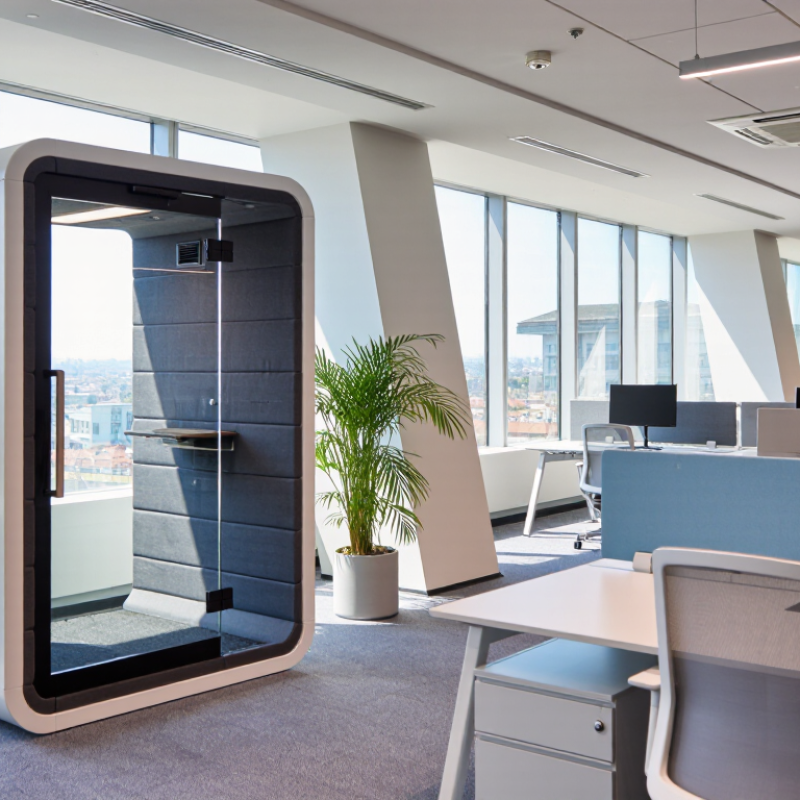
For global buyers, choosing the best Personal Space products in 2026 means looking beyond appearance. A privacy pod may soften office noise, while a desk divider can create a quieter corner without major changes. Small details matter: door clearance, ventilation, fabric cleaning, lighting, and the space needed for delivery and installation. Fit is not universal.
Environmental psychologist Robert Sommer described personal space as “an area with invisible boundaries surrounding a person’s body into which intruders may not come.” His book, Personal Space: The Behavioral Basis of Design, remains a useful reference for understanding why people value distance and privacy. The idea helps explain why one buyer may prefer an enclosed pod, while another feels more comfortable with an open screen and a clear view of the room.
This guide compares product types, practical features, and questions buyers should ask suppliers. It considers sound reduction, comfort, materials, assembly, warranties, and after-sales support. Global sourcing can make specifications harder to compare. A published acoustic rating, for example, does not tell the whole story about a product in a busy, reflective office. Ask for test details and sample materials where possible. Check measurements twice. That sounds obvious, but it is often missed. No product suits every workplace, budget, or cultural preference, and some recommendations may need rethinking after real use. The aim is not perfect isolation. It is a more comfortable, usable sense of privacy.
2026 Best Personal Space Products for Global Buyers?
What Personal Space Products Are and How They Create Privacy
Personal space products create a small boundary within shared rooms. Common options include desk screens, movable partitions, acoustic panels, and enclosed work pods. They can block sightlines, soften nearby speech, or signal that someone needs focus. A fabric screen beside a desk, for example, may reduce visual distraction without closing off the whole area. These products do not make a room fully soundproof. That distinction matters.
A 2013 study by environmental psychologists Jungsoo Kim and Richard de Dear analyzed workplace survey data from 42,764 occupants in 303 office buildings. The researchers found open-plan offices scored lower than private offices across several environmental satisfaction measures, with sound privacy among the biggest concerns. This supports a practical approach: match the product to the problem. Choose a movable screen for visual separation, or an acoustic treatment when conversations carry across the room. Product performance still depends on layout, materials, and installation. Sometimes, a screen simply shifts the noise elsewhere.
Tips: Check dimensions, fire-safety documentation, cleaning needs, and replacement-part availability before ordering internationally. Test one unit in the intended space first. It may not solve everything.
Personal space products in 2026 range from simple desk dividers to enclosed acoustic pods. Desktop screens create a visual boundary without taking much floor space. Fabric-covered panels can soften nearby conversation, though they will not make a busy office silent. Small details matter. Check panel height, edge stability, and whether the surface can be cleaned easily.
Freestanding room dividers suit shared work areas, clinics, and temporary project zones. They can be moved as layouts change, but lightweight models may wobble on uneven floors. Acoustic booths offer more privacy for calls and focused tasks. Buyers should compare ventilation, lighting, interior dimensions, and access for maintenance. A booth that feels spacious in a product photo may feel cramped during a long meeting.
Other options include compact privacy canopies, monitor-mounted screens, and modular partition systems. These products address different needs, so the setting matters more than a trend forecast. Measure doorways and desk depth before ordering. Confirm material details and installation requirements with the supplier, especially for larger structures. I would not assume that a higher price guarantees better sound control; published test details and a clear return policy are more useful. Some layouts still need trial and error.
When comparing personal space products, start with the task and setting. A desk divider may reduce visual distraction, while an enclosed pod also needs effective ventilation, lighting, and usable entry space. Measure the available floor area, doorways, and ceiling height before ordering. Small details matter.
Compare acoustic claims carefully. Ask whether sound reduction was tested in a laboratory or a finished room, and request the test method and full report. A single rating can hide important differences. I would not rely on that number alone; room layout, installation gaps, and background noise can change results.
Check materials, cleanability, edge finishes, and replacement-part availability. For powered products, review electrical specifications and confirm compatibility with the destination country. Request documentation for applicable fire-safety, emissions, and electrical requirements, then verify it against local rules; standards vary by market. Check the paperwork. Also compare warranty terms, assembly time, and accessible controls. A product can look suitable in a brochure but feel cramped after a chair, bag, and person share the same space. Product sheets rarely answer every question, so a sample or site assessment may be worthwhile. I might still overlook a practical issue. Ask users to test the setup.
Personal space products work best when they match the room, not just the product photo. In crowded offices and compact homes, a folding desk screen may offer useful separation without taking up much floor space. In shared work areas, acoustic panels can soften nearby conversation, though they will not make a busy room silent. Small details matter. Check panel height, cleaning needs, setup time, and whether the product fits through a narrow doorway.
Regional conditions can change what buyers value. In humid, warm climates, breathable fabrics and surfaces that wipe clean may be easier to maintain. In colder regions, buyers may care more about sturdy materials and comfort during long indoor workdays. Housing also differs: a renter may prefer a lightweight divider that leaves no marks, while a permanent office can accommodate heavier fixtures. These are broad patterns, not rules. A buyer in a quiet suburb may need more privacy than someone in a dense city.
Buying conditions deserve equal attention. Import costs, delivery times, local storage, and replacement-part access can affect the real price. Ask suppliers for dimensions, material details, care instructions, and clear shipping terms before ordering. If possible, test one unit first. That takes longer, and it may feel cautious. Still, product descriptions rarely show how a screen feels beside an actual desk. A good choice balances privacy, comfort, maintenance, and the space available.
How needs and buying conditions differ across regions
Urbanization is useful context when considering compact, privacy, and noise-management products, but it is not a direct measure of product demand. Housing space, climate, income, and retail access also shape regional needs and buying conditions.
Source: World Bank World Development Indicators, urban population (% of total population), 2023; regional figures rounded. View indicator.
Global buyers should choose personal-space products around the task, not the trend. A focus booth needs room for a chair, laptop, and comfortable movement; a privacy screen may suit a shared desk better. For calls, check speech privacy, ventilation, lighting, and access to power. ISO 23351-1:2020 describes a test method for measuring speech-level reduction in office booths. Ask suppliers for test conditions and reports, not just “soundproof” claims. Fit matters more.
Consider the room as well as the product. Measure doorways, ceiling height, and the booth’s installation footprint before ordering. Check surface materials, cleaning instructions, replacement parts, and whether the unit can be moved. NIOSH recommends limiting occupational noise exposure to 85 dBA over an eight-hour workday; this is a hearing-risk guideline, not a measure of speech privacy. A booth’s test result also cannot predict every room. Hard floors and nearby conversations change what users hear. That detail is easy to miss.
Tips: Write down the intended use, number of users, available space, and daily cleaning needs. Request independent test documentation, then trial a sample in a comparable room. Ask staff what feels awkward. Their feedback may challenge the specification.
Compare common personal-space product categories by use, practical specifications, and purchasing checks. Dimensions and performance vary by design; confirm the product’s own technical data before ordering.
| Product Category | Best-Suited Use | Typical Features or Specifications | Key Selection Criteria | Global Buyer Checks |
|---|---|---|---|---|
| Acoustic Desk Screen | Reducing visual distraction and absorbing some sound around an individual workstation in open-plan offices, libraries, or study areas. | Freestanding or desk-clamped panels; commonly covered with fabric and filled with sound-absorbing material. Height, width, thickness, and panel coverage vary by model. | Measure the desk and available clamp clearance; check panel stability, cleanability, fire-performance documentation, and whether the goal is sound absorption or visual separation. | Confirm the materials and test reports meet applicable local requirements. Check packed dimensions, installation hardware, and whether replacement covers are available. |
| Portable Privacy Screen | Creating temporary visual separation in shared rooms, clinics, classrooms, or temporary work areas. | Often supplied as folding panels or a roll-up screen; may use a washable fabric, plastic, or lightweight rigid surface. Some models include wheels or feet. | Choose a suitable screen height and width; assess privacy coverage, stability, mobility, cleaning method, and the space needed when folded or stored. | Check flame-retardancy requirements for the destination market and intended setting. Verify carton size, assembly instructions, and replacement-part availability. |
| Wearable Noise-Reducing Earmuffs | Reducing exposure to environmental noise in workshops, travel settings, or other noisy environments when the product is appropriate for the task. | Typically use cushioned ear cups connected by a headband. Noise reduction is stated by the maker using a rating or test method; performance depends on fit and correct use. | Compare independently documented noise-reduction ratings using the relevant regional standard; check headband adjustment, cushion comfort, weight, and compatibility with other protective equipment. | For workplace noise hazards, select certified hearing protection suitable for the risk and local occupational-safety rules. Do not rely on comfort or appearance as evidence of protection. |
| White-Noise Sound Machine | Masking intermittent background sounds in a bedroom, study area, or private office. | May offer continuous sound playback, volume adjustment, a timer, and either mains power, USB power, or batteries. Feature sets and sound options vary. | Check the minimum and maximum volume, timer behavior, control layout, power source, and whether the device resumes settings after a power interruption. | For powered models, confirm the input voltage and plug or USB requirements. Check radio or wireless approvals if the device includes wireless connectivity. |
| Personal Task Light | Providing focused illumination for reading, writing, crafts, or individual desk work. | Common formats include adjustable-arm desk lamps and clip-on lights. LED models may offer dimming or adjustable color temperature; lumen output and color rendering differ by model. | Match light output and beam direction to the task; look for stable positioning, glare control, accessible switches, and a suitable mounting method. | Verify electrical safety documentation, input voltage, plug type, and local requirements. For replaceable lamps, check bulb type and availability in the destination market. |
| Compact Personal Air Purifier | Supplementing air cleaning near an individual in a small indoor area, provided the unit is appropriately sized and used as directed. | May use mechanical particle filtration, such as a high-efficiency filter, and may list a clean-air delivery rate (CADR). Filter type, airflow, noise, and room-size claims vary. | Compare CADR with the intended room size and use conditions; check replacement-filter cost and availability, noise level, airflow direction, and maintenance requirements. | Review the complete test method behind performance claims and applicable electrical rules. Avoid relying on unverified health claims; check whether filters and spare parts can be imported. |
| Portable Laptop Privacy Screen | Limiting side-angle visibility of a laptop display in shared offices, public transport, or other public settings. | Usually attaches to the display with tabs, adhesive strips, or a magnetic frame. Size and aspect ratio must match the screen; some designs reduce brightness or alter display appearance. | Match the screen’s diagonal size and aspect ratio, then confirm the display’s usable dimensions, attachment method, touch compatibility, and effect on brightness. | Check compatibility with the exact device model and bezel design. Confirm whether the product can be removed and reused and whether it affects webcam or sensor openings. |
| Foldable Desk Privacy Hood | Creating a more enclosed visual workspace for focused tasks in shared environments or temporary workstations. | Typically uses folding panels or a lightweight hood that sits around a desk area. Some designs are fabric-based; others use rigid or semi-rigid panels. | Measure desk depth, width, and overhead clearance; check ventilation, stability, setup time, folded storage size, and whether the material can be cleaned. | Confirm shipping dimensions and material documentation. For commercial interiors, verify that the product suits local fire-safety and workplace requirements. |