Leave Your Message
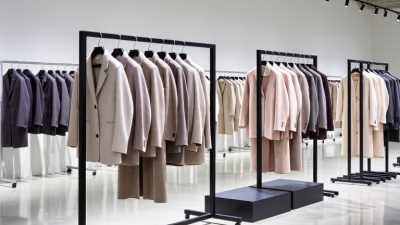
Choosing the right Clothing Racks can change how customers move through a retail store. A sturdy rack keeps garments organized, visible, and easy to browse. A poor choice creates crowded aisles, uneven displays, and unnecessary staff work.
This guide examines ten practical options for retail environments. It considers frame strength, weight capacity, wheel quality, finish, height, and assembly. It also looks at how each rack handles daily use, from busy fitting rooms to frequent stock changes. Details matter. Smooth casters should roll across hard floors without wobbling. Rounded edges can protect delicate fabrics. Adjustable bars may help stores display jackets, shirts, and long dresses on one fixture.
Good merchandising is not only about appearance. It involves reliable performance, sensible spacing, and safe customer movement. A well-designed rack can make a small sales floor feel calmer. It can also help staff replenish products faster. However, no rack suits every store. A heavy-duty garment rack may be ideal for dense inventory but awkward in a narrow boutique.
The recommendations reflect practical retail considerations rather than attractive photographs alone. Materials, construction, and maintenance deserve equal attention. Some options may look refined yet require more assembly or regular care. That limitation should not be ignored. This review offers a balanced starting point for comparing styles, budgets, and store layouts. The best choice is the rack that supports daily operations without distracting from the clothing.
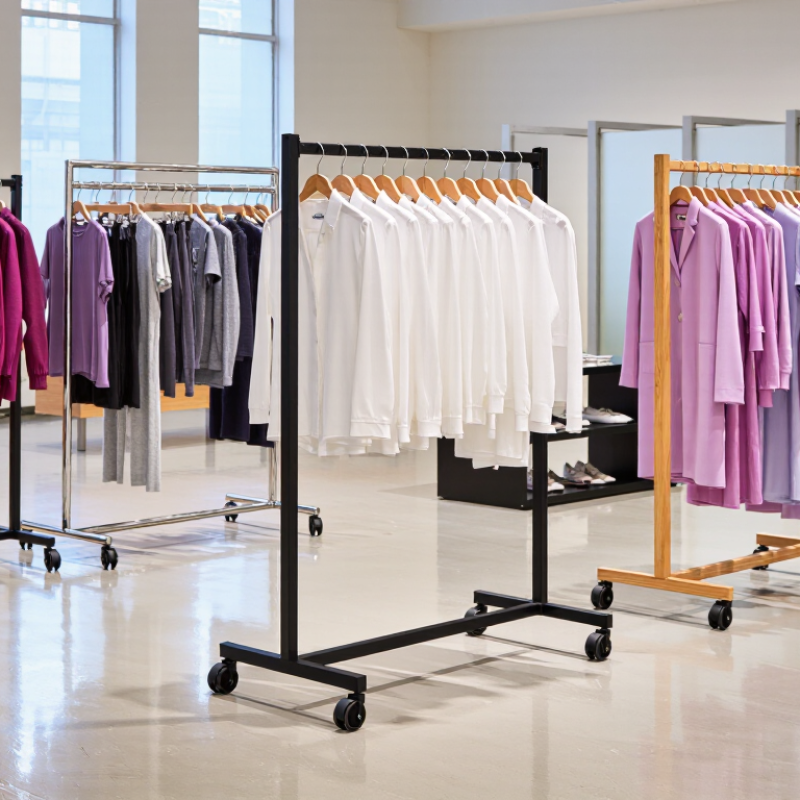
10 Best Clothing Racks for Retail Stores
A suitable clothing rack must support selling, not merely display garments. In my retail planning experience, stable racks reduce unnecessary handling and keep busy aisles calmer. Choose powder-coated steel, strong joints, and adjustable heights. A crowded rack hides products. A weak rack creates hesitation.
The National Retail Federation and Appriss Retail reported that returns reached 16.9% of U.S. retail sales in 2024. Clear product visibility cannot prevent every return, but it helps shoppers compare sizes, colors, and fabric details. That matters near fitting rooms. Retailers should also measure aisle width, rack depth, and customer reach before buying. The International Council of Shopping Centers emphasizes that store layouts must support movement and discovery. A rack with wheels can improve flexibility, yet unlocked wheels may become a safety problem. I have seen attractive fixtures block sightlines. That mistake is easy to miss.
Tips: Test one rack in a live selling area. Hang winter coats and light shirts together. Check sway, noise, and garment spacing. Keep frequently handled items between waist and shoulder height. Leave enough room for a stroller or mobility aid. Do not trust appearance alone. Ask staff to move it during a busy hour. Their feedback may challenge the original plan.
| Rank | Clothing Rack Type | Typical Dimensions | Approx. Load Capacity | Material | Mobility | Adjustability | Best Use in Retail | Key Suitability Features | Suitability Rating |
|---|---|---|---|---|---|---|---|---|---|
| 1 | Double-Rail Rolling Rack | 150–180 cm W × 55–65 cm D × 150–180 cm H | 90–135 kg | Powder-coated steel | Locking swivel casters | Two hanging levels; height often adjustable | Large apparel sections and seasonal collections | High capacity, efficient use of vertical space, easy to reposition, and suitable for separating sizes or product categories. | ★★★★★ |
| 2 | Single-Rail Rolling Rack | 120–180 cm W × 45–60 cm D × 140–180 cm H | 60–100 kg | Steel or aluminum with a protective finish | Locking swivel casters | Rail height may be adjustable | Flexible floor layouts and everyday clothing displays | Provides clear garment visibility, uses less floor space than double-rail models, and can be moved for cleaning or promotions. | ★★★★★ |
| 3 | Four-Way Display Rack | 75–100 cm W × 75–100 cm D × 130–170 cm H | 45–90 kg | Steel frame with metal or wood arms | Usually stationary; some models have casters | Arms or hooks may be height-adjustable | Feature displays, clearance areas, and coordinated outfits | Displays garments from multiple directions and supports different merchandising levels, improving browsing access in compact areas. | ★★★★★ |
| 4 | Round Garment Rack | 90–150 cm diameter × 130–170 cm H | 45–90 kg | Steel tubing with a powder-coated finish | Often fitted with casters | Fixed or adjustable height | Promotional merchandise and central floor displays | Offers high hanging capacity within a compact footprint and allows customers to browse garments around the full circumference. | ★★★★☆ |
| 5 | Wall-Mounted Straight Rail | 60–240 cm W × 25–35 cm D × 15–35 cm H | 30–90 kg per rail | Steel, aluminum, or solid wood | Fixed installation | Some systems allow rail repositioning | Perimeter walls, narrow stores, and premium displays | Maximizes wall space, keeps walkways open, and creates a clean display when securely anchored to suitable structural surfaces. | ★★★★☆ |
| 6 | Gondola-Style Garment Rack | 90–120 cm W × 45–60 cm D × 130–170 cm H | 90–180 kg | Steel uprights with adjustable metal rails | Generally stationary | Multiple adjustable levels | High-volume stores and organized department layouts | Provides strong structural stability, supports multiple product levels, and can combine hanging garments with folded merchandise. | ★★★★☆ |
| 7 | Expandable Collapsible Rack | 90–150 cm W × 45–60 cm D × 100–170 cm H | 30–75 kg | Steel tubing or aluminum | Lightweight and usually portable | Width and sometimes height adjustable | Pop-up shops, events, temporary sales, and back rooms | Folds or adjusts for transportation and storage, making it practical where display requirements change frequently. | ★★★★☆ |
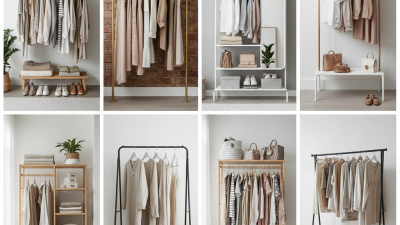
| 8 | Four-Tier Garment and Shelf Rack | 90–120 cm W × 45–60 cm D × 150–180 cm H | 60–120 kg total | Steel frame with metal or laminated shelves | Casters available on many models | Shelf levels may be adjustable | Mixed displays of hanging clothes, shoes, bags, and accessories | Combines hanging and shelving functions, helping retailers create complete outfit presentations in one compact unit. | ★★★★☆ |
| 9 | Boutique Ladder Rack | 60–100 cm W × 35–50 cm D × 150–190 cm H | 20–50 kg | Solid wood, metal, or a combination of both | Usually stationary | Fixed stepped rails or hooks | Small boutiques, front-of-store statements, and curated collections | Uses vertical space attractively, creates a layered presentation, and works well for limited quantities or high-visibility products. | ★★★☆☆ |
| 10 | Heavy-Duty Industrial Rack | 120–240 cm W × 60–90 cm D × 180–240 cm H | 180–450 kg | Heavy-gauge steel | Usually fixed; heavy-duty casters optional | Rails and shelves commonly adjustable | Stockrooms, warehouse-style stores, and bulk inventory | Offers exceptional load capacity and durability, although its larger footprint may be less suitable for narrow customer-facing sales floors. | ★★★☆☆ |