China Top Shelving Units Manufacturers for Global Buyers?
China offers global buyers a broad range of shelving manufacturers, from suppliers focused on simple household racks to factories producing heavy-duty warehouse systems. That variety is useful, but it can make comparison difficult. A product photo rarely reveals steel thickness, coating quality, load capacity, or how securely the shelves lock into place. Details matter.
This guide to China’s top Shelving Units manufacturers explores what buyers should assess before requesting quotes or placing orders. It considers product range, production capabilities, customization, quality checks, packaging, and export experience. Buyers should confirm load ratings and dimensions in writing, then request current product specifications and, where practical, samples or inspection evidence. A supplier’s stated capacity is not a substitute for checking how a specific model performs under real use. Not every factory fits.
Price deserves attention, but the lowest quotation may leave important questions unanswered. Clarify what the price includes, how components are packed, and whether assembly instructions match the final design. Even a careful review can miss a practical detail; packaging damage or unclear instructions may appear only after delivery. Comparing manufacturers against the same requirements makes differences easier to spot. The aim is not to find a perfect supplier on paper, but to identify a capable partner whose products, communication, and documented processes suit the project. A little skepticism helps. Buyers can then make a more informed shortlist and reduce avoidable surprises.
Understanding Shelving Units and Their Main Applications
Shelving units are structures designed to store items vertically while keeping them visible and accessible. Common designs include boltless racks, adjustable shelves, and enclosed cabinets. The right choice depends on what will be stored, how often it is handled, and how much floor space is available. Small details matter.
In a warehouse, deep shelves can hold cartons or spare parts, while lighter racks suit small bins and hand tools. Retailers use shelving to display products at reachable heights. Offices and archives need stable shelves for files, books, and labeled boxes. At home, a compact unit may organize pantry supplies or cleaning equipment. Damp rooms call for finishes that resist corrosion; dusty workshops may benefit from shelves that are easy to wipe clean.
Capacity deserves careful attention. Check the stated load per shelf, and consider whether weight will be spread evenly. A shelf holding heavy boxes in one corner may behave differently from one loaded evenly. That detail is easy to overlook. Measure ceiling height, aisle width, and door clearance before selecting a unit. Adjustable shelves offer flexibility, but frequent changes can loosen fittings if assembly is rushed. Even a well-chosen system needs periodic checks for loose connections, damage, or overloaded levels.
China’s Shelving Industry and Its Manufacturing Strengths
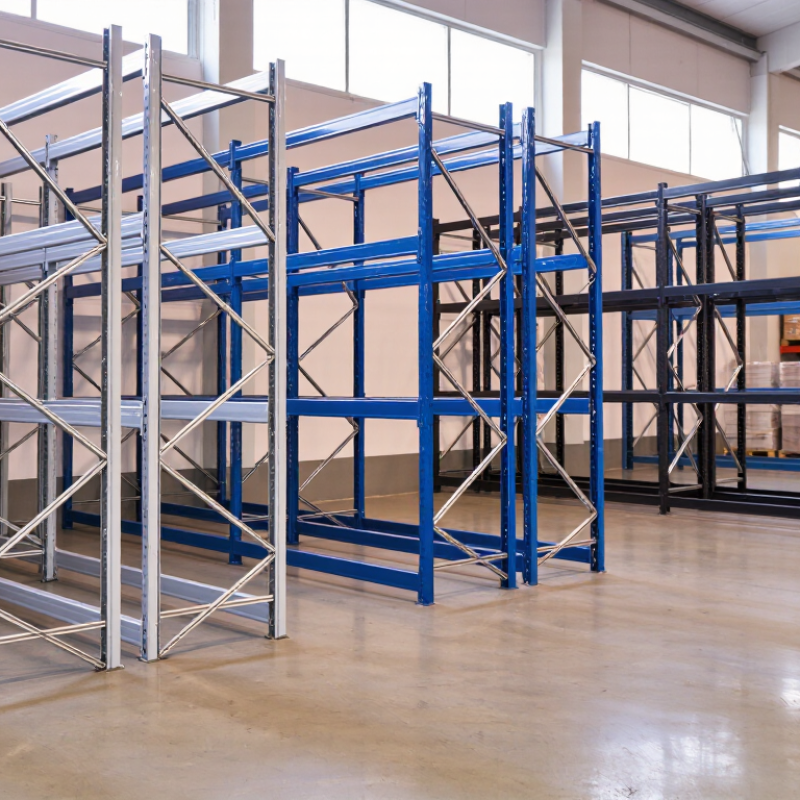
China’s shelving industry benefits from a broad manufacturing base, from steel cutting and roll forming to welding, finishing, and packaging. This concentration can shorten production cycles and make product adjustments easier. Buyers may find options ranging from light-duty boltless racks to heavy warehouse systems, with different shelf depths, beam lengths, and surface finishes.
The factory floor tells you more than a catalogue. Check how uprights are punched, whether welds look consistent, and how powder coating covers corners and edges. Ask for load-test records that match the proposed design, not a general capacity figure. Details matter. A rack’s safe working load depends on its components, assembly, and installation conditions.
Manufacturers often support custom dimensions and export packaging, while established transport links help move large orders. Still, capabilities vary widely between suppliers. A polished sample does not prove that every production batch will match it. Request a pre-production sample, confirm inspection points, and review packaging against the shipping route. One weakness remains easy to overlook: unclear drawings can cause costly changes after production starts. Clear specifications help both sides, though they do not replace independent checks.
Leading Chinese Shelving Manufacturers and Their Product Ranges
Chinese shelving manufacturers offer product ranges for retail, workshops, archives, and distribution centers. Light-duty boltless shelves suit cartons, tools, and small stock. Long-span systems handle wider loads, such as appliance boxes or packed materials. Pallet racking serves warehouses that move goods by forklift. Some factories also make mobile archive shelves and stainless-steel units for damp or hygiene-sensitive spaces. Details matter.
Product catalogs can look complete, but specifications deserve closer attention. Check shelf dimensions, steel thickness, finish, connector design, and stated load capacity. Ask whether capacity applies to each shelf or the full unit. Request drawings and installation guidance before confirming an order. Samples can reveal rough edges or loose-fitting parts that photos may hide. Not every supplier offers the same level of engineering support, and a low quotation may leave important accessories unclear. Buyers should compare the exact configuration, packaging, and replacement-part process. A product range is useful only when it matches the room, stock, and handling equipment. Even careful checks cannot remove every risk, so keep requirements in writing and review them against delivered goods.
How Global Buyers Can Evaluate Shelving Suppliers
Global buyers should evaluate shelving suppliers by more than catalog photos and unit prices. Ask for drawings that show shelf dimensions, upright thickness, beam connections, and stated load limits. A clear specification makes competing quotations easier to compare. Small details matter. Request a sample or inspect a finished unit, checking for sharp edges, uneven coating, and loose connections.
Ask how load ratings are tested and whether results apply to the exact configuration you plan to order. A rating for one shelf depth may not fit another. Request material details, inspection records, and any relevant test documentation. For a factory review, look at welding consistency, packing methods, and how damaged parts are recorded. One polished sample is not the whole process.
Communication is part of quality control. Send a marked-up drawing and note how quickly the supplier identifies missing information. Confirm production lead time, carton dimensions, spare-part availability, and what happens when an inspection finds a defect. Compare the full delivered cost, not only the quoted price. The cheapest offer can become expensive when packaging is weak or specifications change late. And a smooth sales conversation is reassuring, but it is not proof; buyers should verify key claims and keep written records. I would still leave room for judgment: factory visits and samples can reveal a lot, but neither guarantees every shipment will match.
How Global Buyers Can Evaluate Shelving Suppliers
Suggested weighting for a practical supplier assessment (100 points total)
How to use this chart: Give greater weight to documented load capacity and safety, then assess quality controls, customization, delivery reliability, total cost, and after-sales support. These are suggested evaluation weights—not survey results or claims about specific manufacturers. Verify product ratings, applicable safety requirements, lead times, and warranty terms for each project.
Quality Standards, Customization, and International Shipping
When sourcing shelving units from China, treat the load rating as a tested limit, not a sales phrase. Ask for drawings, material thickness, coating specifications, and test records for the exact configuration. For adjustable pallet racking, EN 15512 sets design requirements; confirm which standard applies to your product. A shelf tested at one span may behave differently when beam spacing changes. Details matter.
Define customization with measurements, not adjectives. Specify bay width, depth, shelf levels, and expected load per shelf. Request a pre-production sample or pilot bay, then inspect welds, coating coverage, hole alignment, and assembled stability. Custom dimensions can improve warehouse fit, but may increase minimum order quantities and production time. I would still recheck the approved drawing against the final shipment. Small discrepancies happen.
Packaging and delivery deserve equal scrutiny. Ask how uprights are bundled, edges protected, and hardware labeled; unclear packing can slow installation. The World Bank’s 2023 Logistics Performance Index assessed 139 economies, including shipment timeliness and tracking. These factors matter when comparing shipping plans, not just quoted freight costs. UNCTAD’s Review of Maritime Transport 2024 reports that maritime trade grew 2.4% in 2023, while noting ongoing disruption risks. Build schedule buffers, confirm container loading plans, and agree who handles damage documentation before dispatch.