Dining Tables are more than central furniture pieces for global buyers. They influence room layout, customer comfort, and long-term household value. A well-designed table must balance appearance, stability, dimensions, and maintenance needs. Buyers often compare solid wood, engineered panels, stone, and recycled materials. Each option performs differently in humid, dry, or coastal environments. Details matter. A table may look elegant online but feel unstable in person. Buyers should request material specifications, weight limits, surface treatments, and assembly instructions before placing an order. These documents reveal a supplier’s practical experience and quality-control standards.
Global purchasing also involves packaging, transport, compliance, and after-sales support. Experienced suppliers usually provide protective corner guards, moisture-resistant packaging, and clear inspection procedures. Buyers can ask for factory photographs, production samples, test reports, and references from comparable markets. Photos are not proof. Independent inspections may help confirm dimensions, finish consistency, and structural strength before shipment. Yet no purchasing method removes every risk. Wood can vary in grain, color, and moisture response, even within the same batch. That imperfection deserves honest communication, not exaggerated promises. Reliable suppliers explain tolerances and report problems early. They also check labeling, safety requirements, and destination-market documentation. For global buyers, Dining Tables represent a broader sourcing decision. The right choice combines design appeal with measurable performance, responsible manufacturing, and dependable communication. This article explores why these factors matter when selecting tables across international markets.
A dining table is a raised, stable surface designed for eating, serving, and gathering. Its role extends beyond holding plates. It organizes daily routines, supports conversation, and often becomes a temporary workspace. Grand View Research’s 2024 Home Furniture Market report estimates the global home furniture market exceeded USD 500 billion in 2023. That scale shows why buyers should assess function, not appearance alone.
A suitable table must match the room, household size, and local habits. A 120-centimeter round table can seat four people comfortably, while a 180-centimeter rectangular table usually supports six. Buyers should check tabletop thickness, edge safety, leg clearance, moisture resistance, and finish performance. EN 12521 covers strength, stability, and durability requirements for domestic tables in European markets. Other regions may apply different testing expectations. Professional sourcing teams should request test reports, material specifications, and care instructions before purchasing.
The table also shapes movement. Chairs need roughly 60 centimeters of personal width, with clear space behind them for safe passage. Solid wood offers repairability, but it can expand or contract with humidity. Engineered materials may provide better consistency, though damaged surfaces can be harder to restore.
A polished finish is not always practical. Fingerprints, heat marks, and children can expose weak design choices quickly. I have found that buyers sometimes focus too heavily on style. That judgment deserves reconsideration. A dining table should look inviting, but it must survive ordinary life.
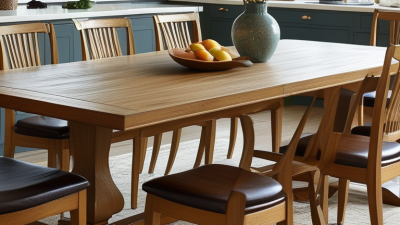
Why Are Dining Tables Important for Global Buyers?
How Do Dining Tables Reflect Regional Lifestyles and Cultural Practices?
A dining table is more than a surface for serving food. It records how people gather, host, work, and share daily routines. UN DESA’s Household Size and Composition Around the World 2019 reports an average global household size of 3.45 people. Regional differences remain significant. Larger households often need wider tables, stronger frames, and flexible seating. In compact European apartments, extendable tables can protect valuable floor space. In parts of Asia, lower dining arrangements may support floor-based meals and closer group interaction. These patterns guide practical purchasing decisions.
Hosting customs also shape table design. A round table encourages eye contact and reduces visible hierarchy during shared meals. A long rectangular table suits formal dinners, family celebrations, and larger homes. CSIL’s World Furniture Outlook 2024 indicates that Asia represents roughly half of global furniture consumption, showing why regional preferences deserve careful attention. Materials tell another story. Wood can suggest warmth and continuity, while stone or glass may suit modern urban interiors. Yet this interpretation can be imperfect. Not every household follows tradition, and younger buyers often mix regional habits with global design ideas. A table with hidden extensions, stain-resistant finishes, and movable chairs may serve this changing reality better than a culturally narrow design.
How household size reflects regional lifestyles and cultural dining practices
Larger average households often require bigger dining surfaces, flexible seating, and space for shared meals and social gatherings. Smaller households may prioritize compact, multifunctional tables suited to urban homes and everyday dining. The figures are regional estimates for 2010–2015 from the United Nations Department of Economic and Social Affairs.
Source: United Nations, Department of Economic and Social Affairs, Household Size and Composition Around the World 2017. View source
Why Are Dining Tables Important for Global Buyers?
Materials and designs must respond to local space, climate, habits, and regulations. A dining table for a compact European apartment may need an extendable top and slim legs. In larger North American homes, solid wood tables with generous seating often feel more suitable. Humid markets require sealed surfaces, corrosion-resistant fittings, and stable construction. Small details matter.
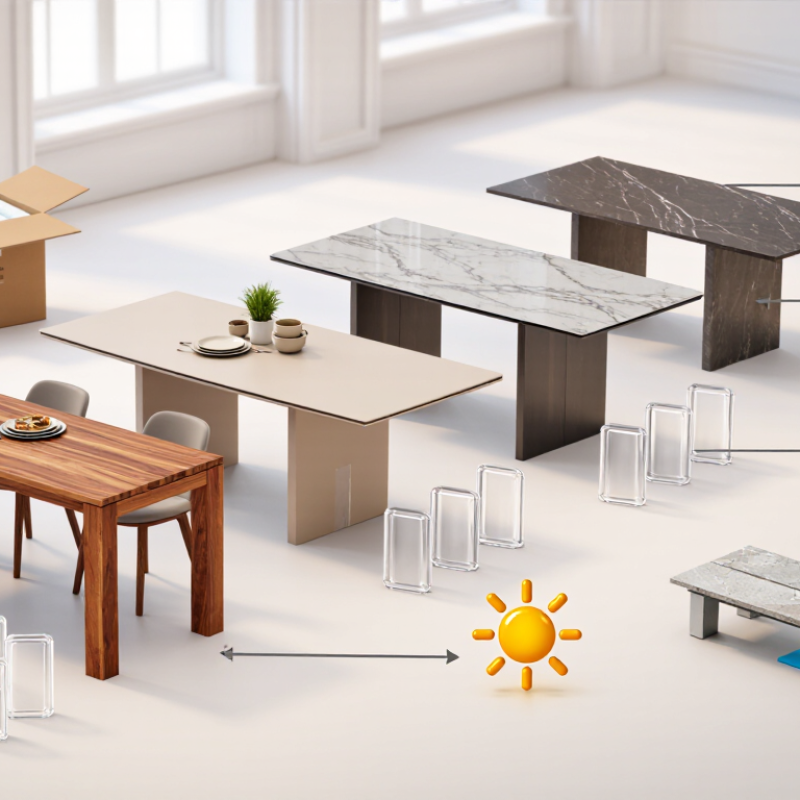
Grand View Research’s Furniture Market report estimated the global furniture market at about $516.66 billion in 2022, with continued growth expected through 2030. This scale reflects diverse purchasing priorities, not one universal design. Solid wood offers warmth and repairability, while engineered wood can reduce weight and control costs. Sintered stone resists stains and heat, but its weight can raise shipping and installation challenges. Recycled metal suits modern interiors, although surface temperature and noise may affect comfort.
UNEP’s Global Resources Outlook 2024 reports that natural resource extraction has tripled over five decades and could rise another 60% by 2060. Buyers therefore increasingly examine material efficiency, durability, and end-of-life options. Knock-down structures can reduce transport volume. Replaceable components may extend service life. Yet “sustainable” claims require evidence, not attractive wording. Even certified materials need careful sourcing and honest documentation. A beautiful table can still fail if its finish cracks in tropical humidity or its dimensions ignore local dining customs.
Dining tables matter to global buyers because they shape daily meals, meetings, and family routines. Their value is not limited to appearance. A suitable table must fit the room, household, and local shipping conditions. In my experience reviewing furniture specifications, size creates the first practical test. Measure doorways, stair turns, and chair clearance before ordering. A table that looks compact online may feel crowded in a small apartment. Conversely, a narrow design may disappoint buyers with large families.
Quality becomes visible through materials, joinery, surface finishing, and hardware. Solid wood can offer a warm feel, but its moisture response needs honest explanation. Engineered panels may provide stable performance when edges are sealed properly. Buyers should inspect load ratings, leg connections, and warranty terms rather than trust polished photographs. Ask for finish samples when color accuracy matters. Small details count. Poorly aligned joints can loosen after repeated use, even when the tabletop appears thick.
Durability influences total value more than the opening price. A dining table faces spills, hot dishes, moving chairs, and frequent cleaning. Finishes should resist ordinary stains, but no surface is indestructible. That limitation deserves clear communication. Buyers should compare care requirements, replacement-part availability, and tested strength data. I have seen attractive tables become inconvenient because maintenance instructions were vague. A careful decision balances dimensions, verified construction, and realistic household habits, while accepting that one design may not suit every market.
| Buyer Decision Dimension | Practical Data Benchmark | Why It Matters to Global Buyers | Effect on Purchase Decision | Recommended Specification or Evaluation Point |
|---|---|---|---|---|
| Seating Capacity | Approx. 24 in / 61 cm of table edge per person | Helps buyers estimate realistic seating capacity while preserving elbow room and comfortable place settings. | High Influence | Specify the number of regular seats separately from the maximum occasional capacity. |
| Common Table Length | 48 in / 122 cm: 4 seats 60 in / 152 cm: 6 seats 72 in / 183 cm: 6–8 seats |
Standard dimensions simplify space planning, packaging, retail display, and project specification. | High Influence | Offer several length options and clearly state whether dimensions include extensions or leaves. |
| Table Width | 36–42 in / 91–107 cm is a common dining range | Width affects place settings, shared dishes, centerpiece space, and the ability to converse across the table. | High Influence | Use narrower widths for compact homes and wider formats for family dining or hospitality applications. |
| Table Height | Approx. 28–30 in / 71–76 cm | Correct height supports comfortable leg clearance and compatibility with commonly available dining chairs. | High Influence | Declare finished height, tabletop thickness, apron clearance, and compatibility with standard chairs. |
| Circulation Space | At least 36 in / 91 cm around the table; 42–48 in / 107–122 cm is preferable in active walkways | A table that fits the room footprint but blocks movement creates dissatisfaction after installation. | High Influence | Publish a recommended minimum room size for every table dimension. |
| Material Moisture Control | Wood furniture is commonly conditioned near 6–8% moisture content, adjusted for local climate | Proper conditioning reduces the risk of cracking, warping, joint movement, and finish problems during international shipping. | High Influence | Request documented moisture-control procedures and climate-appropriate acclimatization guidance. |
| Surface Resistance | Evaluate resistance to abrasion, staining, heat, and household liquids | Dining tables face repeated exposure to food, drinks, cutlery, cleaning products, and temperature changes. | High Influence | Ask for test results or care instructions covering stains, hot objects, scratches, and daily cleaning. |
| Structural Stability | Check joint strength, leg rigidity, tabletop deflection, and resistance to rocking | Structural stability is a direct indicator of perceived quality and long-term user safety. | High Influence | Inspect corner joints, fasteners, support rails, leg attachment points, and load-test documentation. |
| Panel and Edge Construction | Solid wood, veneer over engineered panel, and laminate each provide different performance profiles | Construction affects dimensional stability, appearance consistency, repairability, cost, and shipping risk. | High Influence | Disclose core material, veneer thickness where applicable, edge treatment, and repair limitations. |
| Extendable Mechanism | Assess opening force, alignment, locking action, and repeated-use performance | Extension systems increase flexibility but add components that may loosen or misalign over time. | Medium Influence | Demonstrate the fully opened and closed positions and state the supported seating capacity in each mode. |
| Safety and Compliance | Review applicable furniture safety, chemical-emission, packaging, and labeling requirements | Requirements vary by destination market, and missing documentation can delay customs clearance or retail approval. | High Influence | Maintain product specifications, material declarations, test reports, care labels, and traceability records. |
| Packaging and Shipping Risk | Focus on corner protection, moisture barriers, compression resistance, and carton optimization | Large, heavy furniture is vulnerable to impact, humidity, abrasion, and dimensional damage during global logistics. | High Influence | Use reinforced packaging and verify packaged dimensions, gross weight, pallet requirements, and drop-test procedures. |
| Maintenance Requirements | Compare cleaning frequency, refinishing needs, water sensitivity, and replacement-part availability | Lower maintenance reduces ownership cost and makes the product more attractive across different household routines. | Medium Influence | Provide clear care instructions and specify whether touch-up materials or replacement hardware are available. |
| Expected Service Life | Prioritize documented performance and repairability rather than an unsupported fixed lifespan | Durability expectations depend on material, usage frequency, environment, maintenance, and construction quality. | High Influence | Use warranty terms, inspection records, test results, and replaceable components as evidence of long-term value. |
| Total Cost of Ownership | Purchase price + freight + duties + assembly + maintenance + potential replacement cost | A lower initial price may become less competitive when transport, damage claims, maintenance, or early replacement are included. | Market Dependent | Compare landed cost and lifecycle value instead of evaluating unit price alone. |
Global buyers should assess dining tables as long-term commercial products, not attractive photographs.
The global furniture market was valued at approximately USD 516.66 billion in 2022, according to Grand View Research. Competition is intense. Small differences in durability, packaging, and service can affect repeat orders.
Measure everything twice. Confirm table length, width, height, top thickness, leg clearance, and carton dimensions. A six-seat table may fit a showroom but fail in a compact apartment.
Review moisture resistance, scratch testing, joint strength, and load capacity. EN 12521 provides safety and strength guidance for domestic tables. Buyers should request recent laboratory reports, not only supplier claims.
My own purchasing mistake was trusting a material description without checking the core structure. It looked solid. It was not.
Material origin also deserves careful review. The FAO Global Forest Resources Assessment 2020 reported that 420 million hectares of forest were lost worldwide between 1990 and 2020. Ask for traceable wood documentation, recycled-content evidence, and low-emission finish information.
Packaging matters too. Inspect corner protection, drop-test results, pallet stability, and replacement-part procedures. The International Trade Centre notes that furniture trade depends heavily on reliable logistics and market compliance.
Customs delays can erase a seemingly low purchase price. Calculate the landed cost, including freight, duties, inspection, damage, and local handling. Leave room for mistakes. Forecasts are never perfect.
A practical sample inspection may reveal more than a polished catalogue.